
Published by MES PAT Testing Ltd | Electrical Compliance & Regulatory History Guide
In today’s commercial workplace, Portable Appliance Testing (PAT) is as routine as changing a coffee filter or completing an annual fire drill. However, formal electrical inspection wasn’t always a workplace standard. Understanding how these vital safety regulations have evolved helps business owners, landlords, and facilities managers navigate modern compliance requirements.
Quick Take: Key Milestones in UK Electrical Safety History
Workplace electrical compliance in the UK evolved through key legislative milestones: the Health & Safety at Work Act 1974 established an employer’s statutory duty of care, the Electricity at Work Regulations 1989 mandated electrical system maintenance, and the IET Code of Practice (now 5th Edition) established risk-based portable appliance testing (PAT) standards.
Historical Timeline: Evolution of Electrical Regulations
| Era / Legislation | Key Regulatory Impact on Electrical Safety |
|---|---|
| 1960s | Rapid post-war adoption of commercial appliances led to a surge in workplace electrical shocks and fires, prompting initial safety discussions. |
| Health & Safety at Work Act 1974 | Groundbreaking legislation establishing a statutory duty of care for employers to maintain safe working environments and electrical equipment. |
| Electricity at Work Regulations 1989 | Formalized legal requirements that all workplace electrical systems and appliances must be maintained to prevent danger. |
| PUWER 1998 | Provision and Use of Work Equipment Regulations mandated that all work tools and equipment must be suitable, inspected, and safe for use. |
| Modern IET Code of Practice | Shifted compliance from rigid annual “blanket” testing to a risk-assessed approach tailored to equipment type and environment. |
Detailed Breakdown of Regulatory Milestones
The 1960s: The Birth of Appliance Safety Awareness
In the mid-20th century, commercial offices, manufacturing plants, and homes saw a massive boom in electrical equipment. However, manufacturing standards were inconsistent, earthing systems were basic, and safety testing did not yet exist. A sharp rise in accidental electrical fires and electrocutions sparked the first serious calls for standardized safety testing across the UK.
The 1974 Game-Changer: Health & Safety at Work Act
The real turning point occurred in 1974 with the introduction of the Health and Safety at Work Act. For the first time in UK history, business owners were legally responsible for employee safety. Employers were mandated to ensure all tools, electrical appliances, and machinery were kept in a safe working condition.
The 1989 Regulations: Defining Duty of Care
The Electricity at Work Regulations 1989 (EAWR) expanded on the 1974 Act by explicitly focusing on electrical hazards. Regulation 4(2) stated that “As may be necessary to prevent danger, all systems shall be maintained so as to prevent, so far as is reasonably practicable, such danger.” While the law did not specifically dictate the exact term “PAT testing,” routine visual and electrical testing quickly became the accepted industry method to prove compliance.
The Modern Era: The IET Code of Practice
To give clear guidance to duty holders, the Institution of Engineering and Technology (IET) published its Code of Practice for In-service Inspection and Testing of Electrical Equipment. Now in its 5th Edition, this guide moved the industry away from “one-size-fits-all” annual testing towards a risk-assessed model based on:
- Equipment Type: Handheld power tools require more frequent checks than stationary desktop PCs.
- Operating Environment: Construction sites and commercial kitchens pose higher risks than carpeted corporate offices.
- Equipment Class: Class I grounded appliances require different checks than double-insulated Class II items.
How Modern Testing Technology Has Changed
Today’s compliance process is far more efficient than the manual checks of past decades:
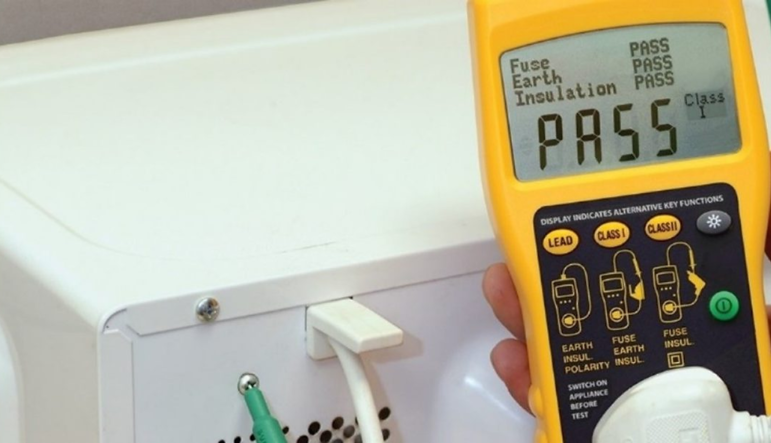
- Calibrated Digital Testers: Modern micro-processor instruments perform precise earth continuity and insulation resistance tests in seconds.
- Digital Asset Registers: Paper logbooks have been replaced by cloud-stored PDF asset registers and digital compliance certificates.
- Barcode Scanning: Barcoded appliance labels allow engineers to scan and track item histories across annual retests.
Book Modern, Compliant PAT Testing Today
At MES PAT Testing Ltd, our City & Guilds qualified engineers bring over 20 years of experience ensuring commercial premises stay fully compliant with current UK electrical regulations. We provide fast, non-disruptive testing across key regional hubs, including Essex, Kent, and London.
Check our clear per-item rates on our pricing page and read client feedback on our reviews page.
Ensure Your Business Meets Current Safety Regulations
Maintain full statutory compliance, protect your workforce, and satisfy commercial insurance policies with our certified testing team.
Direct Office Line: 01376 339 372
MES PAT Testing Ltd | Certified Electrical Compliance Specialists
